News articles
Leaving no one behind: 5 reasons why Impact-Linked Finance is a smart bet for innovative finance for WASH
_In this first blog of the series “**Leaving no one behind: How Impact-Linked Finance boosts impact in water and sanitation**”, we explore how this approach is tackling key sector challenges._
In this first blog of the series “**Leaving no one behind: How Impact-Linked Finance boosts impact in water and sanitation**”, we explore how this approach is tackling key sector challenges.
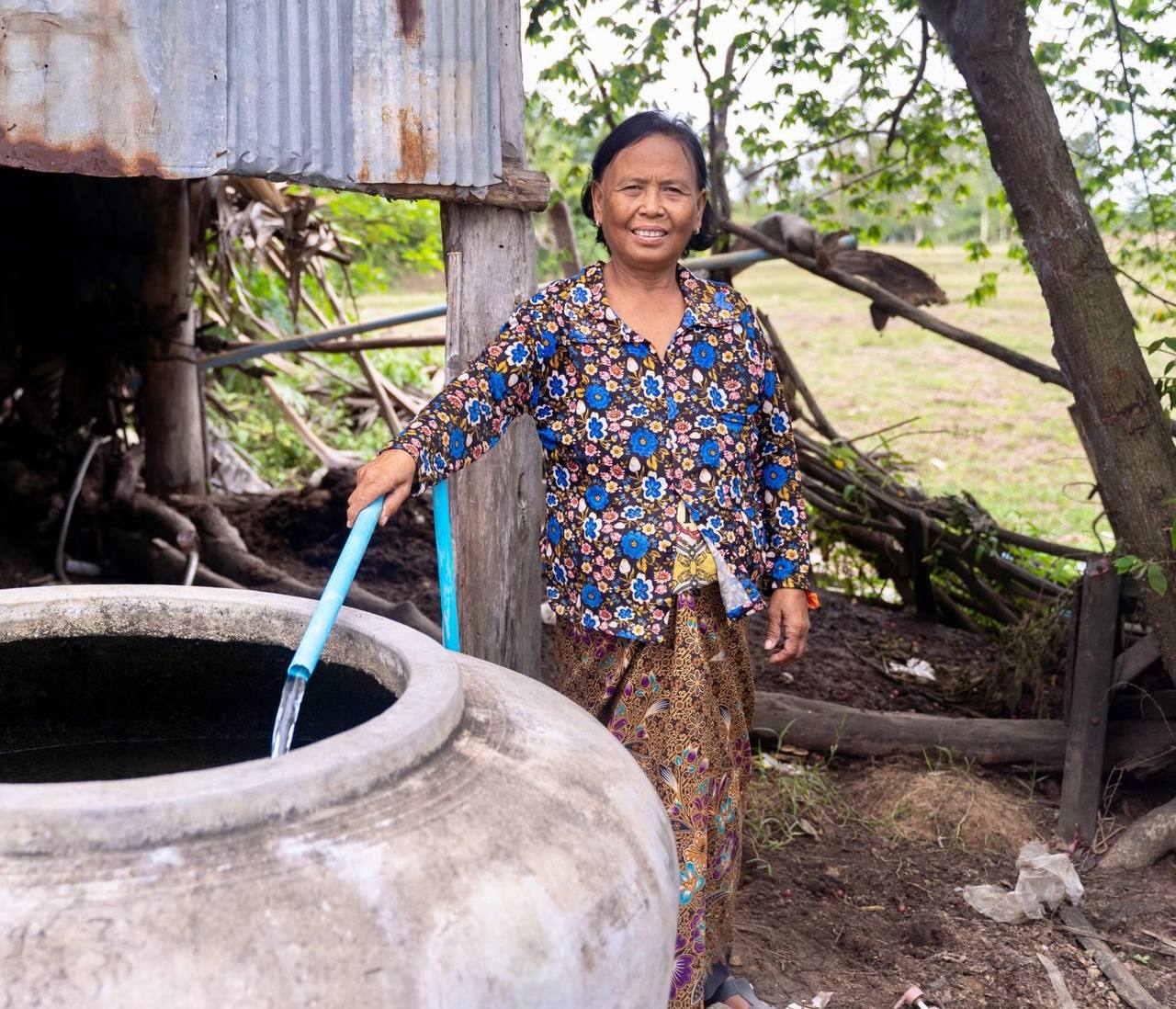
Imagine living in rural Cambodia without access to safe piped water. Some households have a well, but the water can sometimes be unsafe or unreliable, especially during the dry season. Operating a pump also comes with costs for diesel and occasional repairs. Bottled water isn’t a realistic option, as it out of reach for many families. And these are just a few of the challenges people face every day.
Globally, water, sanitation and hygiene (WASH) initiatives face significant challenges, especially when trying to ensure universal access. While SDG 6 aims to “leave no one behind”, the hurdles to accessing safe and affordable water are manifold. Unfortunately, access to finance isn’t always the ally it should be for enterprises. For those serving peri-urban and rural communities, finding the right financing options that support an impact focus can be hard.
Innovative programmes using Impact-Linked Finance instruments, such as ILF for WASH can change this dilemma. But how exactly does this programme drive more sustainability, additionality and the scaling of tangible impact for customers? Let’s look at five reasons:
1. ILF for WASH is a sustainability driver
Impact-Linked Finance is not a simple one-off subsidy. Instead, Impact-Linked Finance instruments such as the Social Impact Incentives (SIINC) or Impact-Linked Loans aim to provide the right amount of incentives, aligned with the enterprise’s longer-term mission. This enables the enterprise to create impact sustainably, especially when targeting last-mile customers.
Khmer Water Supply Holdings (KWSH) is a great example. This clean water enterprise offers affordable water services to (semi-) rural households in Cambodia by acquiring private rural piped water stations and increasing their production and distribution capacities. William Puyo, KWSH General Manager, has witnessed a positive push due to SIINC.
“To me, SIINC is a clear win-win-win situation for all parties involved. For our existing grant providers, it makes sure that we stick to our mission statement and impact objective. For our lenders and shareholders, SIINC improves our commercial performance by allowing us to install connections to last-mile households and then serve these households in perpetuity. And for our end users, SIINC enables them to access services that they would otherwise be excluded from.”
2. ILF for WASH is an additionality booster
Additionality is pushing impact that “wouldn’t have happened anyway”. While there are passionate debates among funders on how to exactly define it, one thing is sure: ILF for WASH applies carefully designed metrics to boost additionality. This, in turn, gives donors and investors real impact value for their dollars.
For KWSH, the increased focus on harder-to-reach customers showed a significant uptick after just two years. Under traditional financing models, this wouldn’t have been possible. As William Puyo points out:
“[The metrics] gave us the much-needed impetus to approve an additional 58km of pipeline expansions to cover more than 1,500 households, which we otherwise would have likely continued to neglect in the absence of those incentives.”
3. ILF for WASH is an outcomes seeker
Seen from the surface, the capital going into the water and sanitation sector should make a real difference. However, the current funding will cover only 16% of the investment needs in new infrastructure. (European Microfinance Platform & Aqua for All, 2022). It is estimated that around USD 138 billion per year is required to deliver universal access to safe water and sanitation services by 2030 (World Bank Group, 2024). Yet even if we neglected this funding gap, an important question remains: How effectively are the available dollars spent? Do they create longer-term impact?
Traditional financing often relies on activities rather than on outcomes. Metrics that count the volume of solutions sold can’t paint a real picture of the depth of changed livelihoods. By linking impact incentives directly to outcomes, however, we can change this. To receive the rewards, KWSH had to achieve ambitious targets that pushed them to expand to last-mile households that would otherwise have been left unserved. The aim is to reach more meaningful, lasting and measurable impact compared to traditional interventions.
4. ILF for WASH is a scaling enabler
Without doubt, scaling water and sanitation initiatives while maintaining impact can be extremely challenging. Entrepreneurs need to be agile, cater to the needs of diverse clients, funders and investors, and, at times, simply survive. What makes ILF for WASH special is that it allows enterprises to scale impact and grow their business in parallel, without having to make painful compromises.
For example, if KWSH had not received Impact-Linked Finance, there would have been no financially viable rationale for connecting hard-to-reach households. With Impact-Linked Finance, the enterprise can pursue a dual journey of strong growth and impact.
5. ILF for WASH is a blended finance mobiliser
Leverage ratios are a good indicator of the catalytic effect of Impact-Linked Finance: using public or philanthropic funding to mobilise more private capital, much like blended finance. For example, ILF for WASH targets a minimum financial leverage of 1:3, enabling different types of capital to join forces and amplify impact.
KWSH has clearly benefitted from achieving measurable outcomes and receiving rewards for it, allowing the enterprise to crowd in substantial commitments from impact investors. This has strengthened its capacity to provide clean water to Cambodia's hardest-to-reach communities for years to come.
_Did these five reasons spark your innovator spirit? Discover how Impact-Linked Finance and the Impact-Linked Fund for WASH can take your impact further. Get in touch today at info@aquaforall.org._
Latest stories
View all News articles
Reaching the Most Vulnerable through Innovative Investment Approaches - World Water Week Reflections
At World Water Week 2026 in Stockholm in August, Aqua for All hosted a session on ‘Reaching the most vulnerable through innovative investment approaches’ together with our partners.
Read more News articles
 News articles
Water Access Acceleration Fund featured in UN Global Compact blended finance playbook
Aqua for All’s collaboration with partners on the Water Access Acceleration Fund (W2AF) has been featured in Business-Led Blended Finance: A Practical Playbook, published by the CFO Coalition for the SDGs of the UN…
Read more