In this second blog of the series “Leaving no one behind: How Impact-Linked Finance boosts impact in water and sanitation”, we explore what continues to draw enterprises to Impact-Linked Finance, and why it is proving to be an effective model for scaling impact while maintaining mission focus.
Imagine you run a WASH enterprise in peri-urban Kenya: you aim to provide safe drinking water for as many families as possible, but the customers you most want to serve cannot afford your services and are difficult to reach with conventional sales and financing models. Commercial pressure is forcing you towards higher-income markets, but your mission is to stay focused on underserved households.
This was the challenge Aqua Clara Kenya (ACK) set out to solve: by offering affordable household water filters, the enterprise can serve rural families, some of them earning around USD5.50 per day, enabling access to safe drinking water without the time-consuming and costly need to boil water.
ACK’s story illustrates the unique benefits that Impact-Linked Finance offers to water, sanitation and hygiene (WASH) enterprises. What makes Impact-Linked Finance (ILF) such a game-changer in leaving no one behind? Here are five defining features:
-
Impact-Linked Finance is bottom-up and enterprise-centric
Our Impact-Linked Fund for Water, Sanitation and Hygiene programme has been designed with the entrepreneur’s unique challenges and mission in mind.
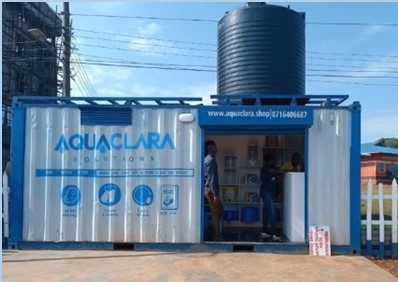
Unlike many top-down financial models, it encourages a collaborative approach, allowing the entrepreneur to help shape the incentive structure together with the funder and transaction manager. This design has been particularly effective for ACK, as the company serves both low-income and more affluent customers.
John Nyagwencha, CEO of Aqua Clara Kenya, describes the company’s situation before receiving Impact-Linked Finance: “There was a big risk for us to become too commercial, also due to pressure from investors for financial returns. Typically, as an entrepreneur, you get tempted to compromise in such a situation and maybe sell to families with higher incomes. But once you deviate from your mission, it’s very hard to come back. The ILF for WASH programme empowered us NOT to go down that path. It provided us with incentives to stay on mission and continue to focus on the hardest-to-reach communities.”
-
Impact-Linked Finance is adaptive and hands-on
Our Impact-Linked Finance offering for WASH enterprises has been designed to adapt to the needs of water and sanitation enterprises. Entrepreneurs work closely with the transaction manager to co-design and implement their incentive metrics. This hands-on process is essential for entrepreneurs to navigate ever-changing landscapes. In addition, such a process not only benefits the enterprise but adds value to investors, too.
Rocío Pérez Ochoa, Co-Founder and Director of Bidhaa Sasa, another Impact-Linked Fund for WASH investee, emphasizes this feature: “What I like about Impact-Linked Finance most is the flexibility. We have received an Impact-Linked Loan, and I appreciate that the interest rate and the incentives are linked and aligned. Usually, it’s the exact opposite: Investors want the full triple bottom line performance but are not ready to sacrifice any returns. Their motto is “no trade-offs, please”. With ILF, however, both sides win, the entrepreneur and the investor.”
-
Impact-Linked Finance is a profitability booster
In traditional finance, profitability often competes with impact goals, and it is not different for the water and sanitation sector. Due to perceived risk, entrepreneurs and their investors tend to shy away from embarking in these potentially high-impact and profitable routes.
The Impact-Linked Fund for WASH programme changes this dynamic by financially rewarding entrepreneurs for kick-starting new, impactful ventures.
Tosca Terra, Head of Impact and Partnerships, at Jibu, has witnessed this effect: “[The Impact-Linked Fund for WASH programme] aligns so well with what we strive to do at Jibu but couldn’t do due to the extra risk. In addition, ILF is very system-changing as it integrates behavioural change into our organisation. This makes it much more sustainable compared to traditional grants.”
-
Impact-Linked Finance supports financial readiness
One of the prerequisites for receiving Impact-Linked Finance is called “Impact-Linked Finance Readiness”. In other words: Entrepreneurs must have the systems and capabilities in place to use and manage Impact-Linked Finance.
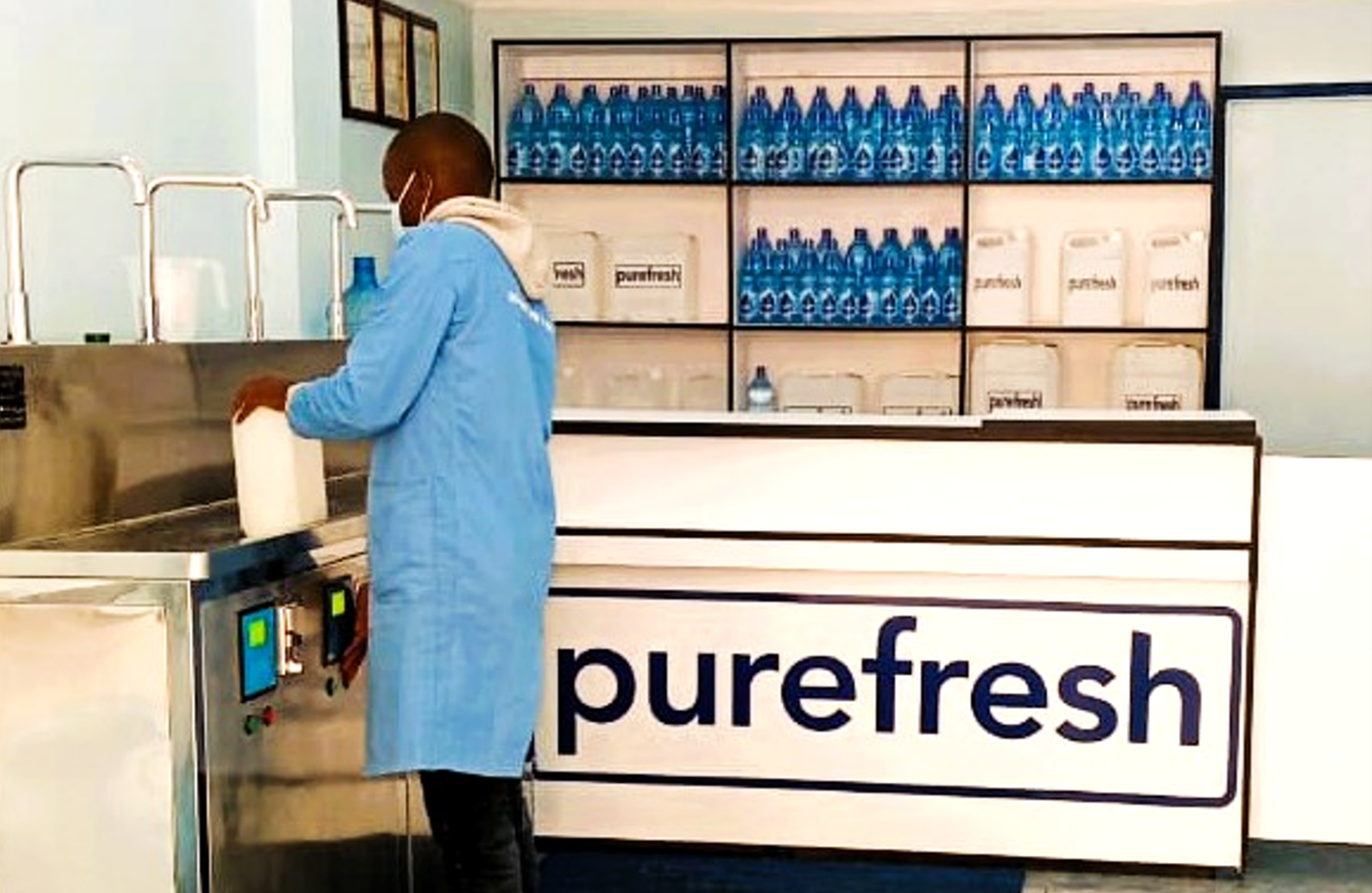
What this readiness actually entails can vary depending on the instrument. For an Impact-Linked Loan (ILL), for example, entrepreneurs need to maintain a repayment structure akin to traditional loans, which demands financial discipline and a stage of more stable revenues. However, the tricky part for most enterprises is defining the impact metrics, for which ILF for WASH also provides training and support.
Antony Kamotho, Managing Director of Purefresh, has been part of the Impact-Linked Finance Readiness Bootcamp: “I find it [the Impact-Linked Loan] pretty straightforward. The only thing that took us a bit of time to understand is how exactly the metrics system works: which metrics to use, how to measure them, and how they are rewarded. The tutors in the Impact-Linked Finance Readiness Bootcamp prepared this knowledge very well.”
-
Impact-Linked Finance is an impact management trainer
Perhaps one of the most transformative aspects of our Impact-Linked Finance offering is its role in impact measurement & management (IMM). Every Impact-Linked Finance transaction requires a strong IMM component, pushing entrepreneurs to truly understand the impact of their work and how to measure it best.
For ACK, this meant implementing an innovative data collection system that allows them to segment customers by income level. John Nyagwencha from ACK remembers his surprise: “I felt like ‘wow, look at how much we’ve been able to learn and how innovative the tools are that we’re using! […] We started to look at our data in a way that we had never done before.”
Conclusion: A model built for impact and growth
To water and sanitation entrepreneurs, Impact-Linked Finance offers a unique opportunity to scale impact while remaining mission-aligned. By putting entrepreneurs in the driver’s seat, offering hands-on support, and rewarding real outcomes, Impact-Linked Finance brings a fresh approach and invites entrepreneurs to redefine what is possible. For those ready to commit to this journey, the rewards are more than financial: they are transformative.